

CONTACT US

PETITHAUSRC7155563
PetitHaus: Innovative housing solution that helps low/medium income earners access affordable, highly efficient qualitative living with convenience and unparalleled cost effectiveness.
Affordable Homeownership

SNEAK PEEK
For a long time, real estate has sold a simple idea: exclusivity = value.
The idea that exclusivity drives rapid property value appreciation. This belief has led to widespread development of gated estates in prime locations, which, although visually appealing, many of these developments don’t actually perform.
They struggle with cash flow and limited economic activity. Which begs the question:
What actually drives property value?
This blog post challenges that misconception by making a compelling business case for 5-minute neighbourhoods—walkable, mixed-use neighbourhoods that integrate residential and commercial spaces.
We will explore how such developments enhance economic productivity, improve quality of life, and sustain property values, all while maintaining housing affordability. But before we get into that, let's lay the foundation with these 2 basic overarching pieces of knowledge.
City planning isn’t limited to building approvals or road layouts. Let's look at it as a composition of two overlapping systems: tangible vs. intangible systems.
The way we develop and utilise tangible systems directly impacts intangible outcomes, which in turn affect residents’ lifestyles and economic activities.
We’ve all heard it: location, location, location.
But location isn’t just geography. Hype and speculation can drive real estate sales, but real (bankable) location/property value is more than simply attributing value to landmarks.
It’s a system, and to fully grasp how this system works, it is essential to understand the interconnected relationship:
These points establish that location is not merely a geographic concept but an economic and social system where productivity and infrastructure are foundational.
Most “exclusive” developments optimise for privacy, not productivity. We separate where people live from where they work, shop, and interact. It feels organised, but it creates friction.
More movement = more cost = less efficiency.
And over time, that friction shows up as:
Lekki exemplifies the other side of suburban planning in high-density neighbourhoods. It represents how single-use zoning (and gated, sprawled) estates restrict developers and landlords’ ability to maximise the development potential of their property.
This single-use zoning limits flexibility to incorporate diverse uses into residential areas. So, despite holding intrinsic value, the economic potential in property is limited to (residential) rent income, as owners can't generate additional revenue or cash flow from commercial tenants.
The extended effect of which is limited growth of the rental market as owners seeking cash flow either convert their property to commercial or only rent to commercial renters, thus pushing housing costs beyond affordability. You can read more about this and how it affects the rental market.
Sprawl, on the other hand, consumes excessive land and requires costly infrastructure. But despite its unfeasibility for sustainable development (infrastructure, cost of housing, inefficient resource utilization) the preference for large gated property in ‘luxury’ estates captures the trade-off of exclusivity (often only for emotional satisfaction) for economic utility.
For example, an elaborate entrance porch is common-practice (even amongst the middle-class) despite its tendency to consume valuable land and development potential that could otherwise contribute to cash flow or profitability, especially when considering rental markets and housing affordability.
Allowing flexible mixed-use developments, especially in the form of commercial spaces integrated within residential zones, can diversify income streams for landlords and increase economic activity locally.
This conflicts with the average understanding of the real estate market in Nigeria, which has sold the “location is everything” and “if it's not exclusive, it's not valuable” narratives. Yet, it is how we can build genuinely sustainable and inclusive neighbourhoods that incorporate walkability to drive economic productivity, without jeopardising housing accessibility and affordability.
‘Walk Score’ in Lagos Island vs. Lekki vs. Ikoyi.
Comparing Awolowo Road (Ikoyi), Admiralty Way, and Balogun Market (Lagos Island) revealed:
Which begs the question: if Lekki is too residential, but too expensive for residences and Lagos Island or Ikoyi is too commercial but also too expensive for commercial. What then or where then is the balance?) And which underscores the need for balanced mixed-use development to maintain affordability and sustainability.
Walk Score measures how easily residents can access daily needs within their environment, rated from 0 to 100.
Now imagine something different. A place where:
This is what walkable neighbourhoods and mixed-use development enable: to combine convenience and economic productivity.
These models emphasize accessibility, ensuring residents can reach essential services within five or fifteen minutes on foot. This proximity enhances quality of life, reduces dependency on cars, and stimulates local economies.
The 5-minute concept is not a real estate marketing strategy. It is rather a compact, ‘amenities-as-a-service’ neighbourhood planning and development model that combines residential, social, and commercial spaces within walking distance to create mutually beneficial economic relationships.
It interweaves the physical and social (tangible) infrastructure resources into a cohesive/connected environment that is easily walkable, so that residents can easily meet their social and economic needs without compromising their
Note that: Whether ‘5-minute’ or ‘15-minute’, nomenclature or duration doesn't matter.
The essence of either is to ensure that residents commute less and translate the cost savings into developments that are profitable, livable, sustainable, and affordable.
Despite having big dreams, the reality is that resources are scarce. The cost of housing, which is a direct reflection of the cost of capital, high construction costs, and inflation, reflects the reality of the Nigerian economy.
This is where proximity becomes infrastructure.
The closer amenities are, the more walkable, liveable, productive, and valuable a place becomes. This is the idea behind the 5-minute and/or 15-minute city, where proximity to (and of) amenities is planned into neighbourhoods for efficiency.
The business merit of the 5-minute city is its economic multiplier effect. It achieves this as follows.
As an antidote to sprawl that consumes excessive land and requires costly infrastructure, compact, vertical development reduces land consumption and infrastructure expenses to maximise development potential, resource efficiency, and affordability.
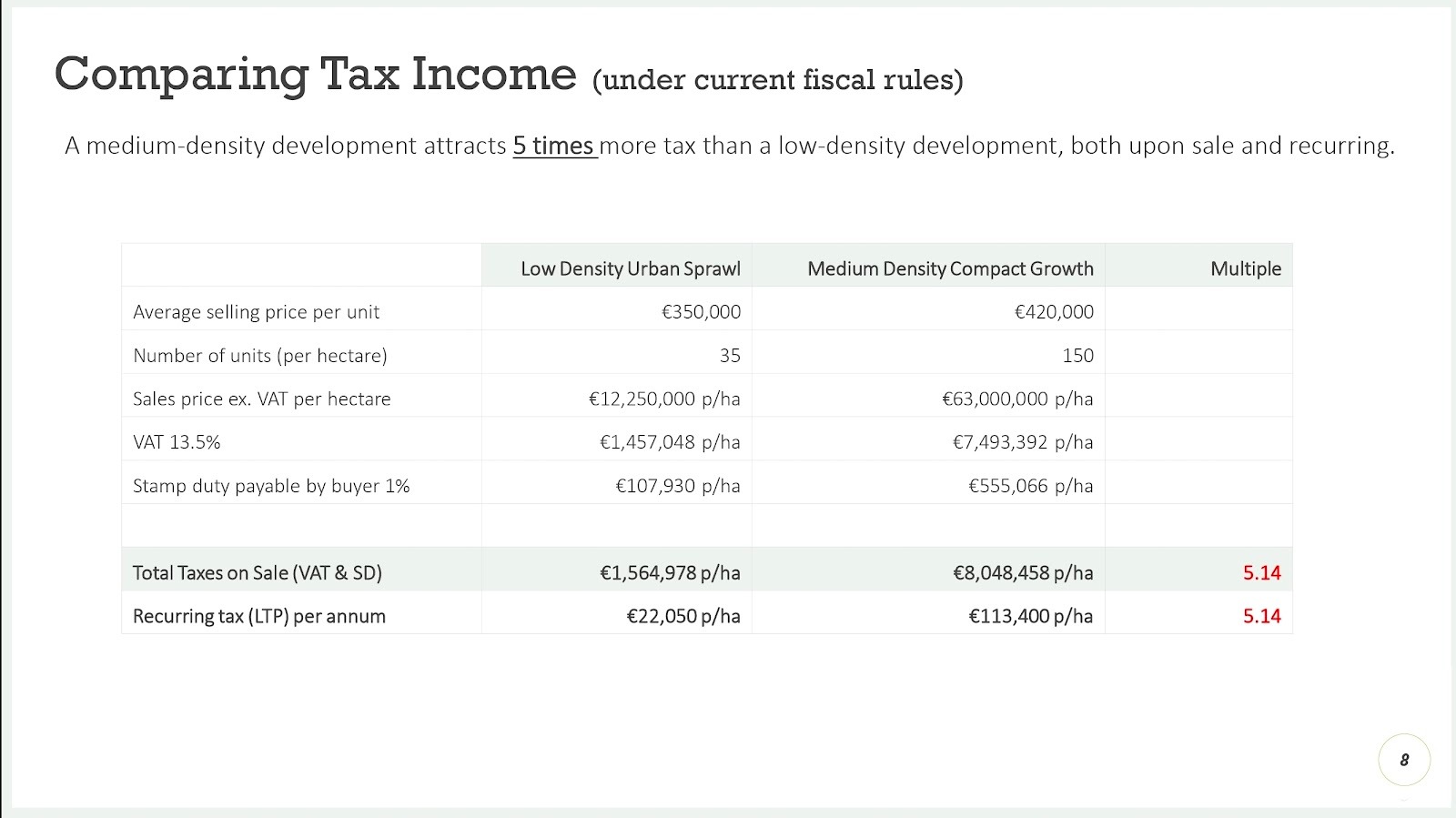
This reduces land churn and, by default, saves infrastructure development costs, which, in addition to reducing development costs, also yields up to five times more tax revenue, highlighting its economic advantage over low-density sprawl.
Safety and security loopholes often stem from poorly managed blind spots, setbacks and undeveloped spaces that foster crime.
Mixed-use developments use the commercial area as a transition zone between private and public spaces. Developing streets as mini-superblocks, for example, naturally integrates setbacks as open, flexible extensions of these commercial spaces (located on the lower floors of buildings). While residential areas remain private behind this open, continuous economic zone, the clear sightlines help to minimise opportunities for crime.
These “open continuous” streets that double as economic zones encourage interaction between residents and business owners. This network effect boosts economic activities, creating loyalty and sustained patronage for cash flow through daily face-to-face relationships.
Housing provides a steady customer base for local businesses, which in turn supports the profitability and sustainability of commercial spaces. This symbiotic relationship enhances economic productivity within the neighbourhood. This is its economic multiplier effect.
This proximity to essential services promotes efficient consumption (good for business) and reduces household costs (great for residents).
Allocating land for parks, playgrounds, and recreational facilities improves residents’ health and happiness, which contributes to sustained economic productivity naturally, falls under amenities and infrastructure development. But in case planners and developers forget, this emphasises the need to invest in the health and wellness of the community.
This must also include an infrastructure maintenance framework. A future-thinking system for ongoing maintenance that ensures amenities remain functional and neighbourhoods stay attractive to preserve quality of life and economic benefits.
Offering residents opportunities to invest back into their neighbourhood fosters a sense of ownership and long-term commitment, which helps neighbourhoods retain wealth within the community as well as stabilise property values.
Here’s where it gets interesting. That when people live and spend in the same area:
One decision, to plan and build for proximity, creates multiple layers of value. And the neighbourhood moves from being a place to live to a system that produces wealth without losing focus on sustainability, housing affordability, and quality of life.
By embedding adaptability and sustainability from day one, these neighbourhoods can evolve with changing demands without relying solely on high-tech interventions. Of course, technology is valuable, but without foundational manual planning that promotes walkability, safety, and social interaction, smart city initiatives will struggle to succeed.
The real estate mantra of "location” is incomplete without productivity and cash flow. Walkable mixed-use neighbourhoods convert geographic points into vibrant, investable places by leveraging:
By rethinking urban development through this lens, cities can create thriving, resilient communities that benefit residents, investors, and governments alike.
This comprehensive approach to neighbourhood planning offers a roadmap for sustainable urban growth that balances profitability with livability, ultimately transforming cities into better places to live and invest.
01.

02.
Category
Discover insights into creating affordable homeownership with PetitHaus.







.avif)
.avif)