

CONTACT US

PETITHAUSRC7155563
PetitHaus: Innovative housing solution that helps low/medium income earners access affordable, highly efficient qualitative living with convenience and unparalleled cost effectiveness.
Affordable Homeownership

SNEAK PEEK
The biggest lie the middle class has been sold about real estate is that ownership automatically creates wealth.
It doesn't. At least, not in the way that is worth it.
You spend years saving for land, buy a plot somewhere on the outskirts, and then spend the next 20-30 years waiting for value to arrive.
Meanwhile, the same city you’re trying to access keeps getting more expensive.
The problem isn't owning an asset. The problem is that nobody taught them how to evaluate whether owning such assets actually fits their capital, income, goals, timeline, and lifestyle.
Well... The market isn't designed to help you win. It's designed to collect money from you. The real estate market has trapped the middle class into a game designed for a different economic class & a different level of capital.
Now, while the rich can afford this game, the capital (that should fetch the middle class economic mobility) gets trapped in immobility.
First, let's acknowledge our...
This pursuit of total (asset and/or investment) ownership is why when most people finally save enough money to invest in real estate or own a property, they do one of two things that stretch them financially... They either:
Both feel like progress. Yet, both cost you economic mobility. Now, the irony is, for the wealthy, cash is a store of value. They can afford to lock it away in prime real estate and simply watch it appreciate.
But for the middle class, cash has one job…
To make more cash.
That your disposable income… That carefully saved, sometimes painfully set aside monthly amount…
Its entire purpose is to help you move up the economic ladder. To generate cash flow and help you build wealth progressively... To work for you while you work.
So when that same capital gets swallowed by a 40-year land bank, or tied to a plot in a location that punishes your daily quality of life, you haven't invested. You've traded your most productive asset for a promise that may take a generation to pay out.
The question is:
Is this the right fit for your capital at this point in your life?
There's a difference between an investment that builds wealth and one that merely holds it. And for the middle class, the difference matters enormously. Because you don't have the luxury of a 30-year runway before your capital starts working.
What we've been building at PetitHaus is a different answer to the problem.
We are creating access to urban equity… In already-developed, already-connected areas, structured so that your capital doesn't have to choose between ownership and productivity.
You can have both.
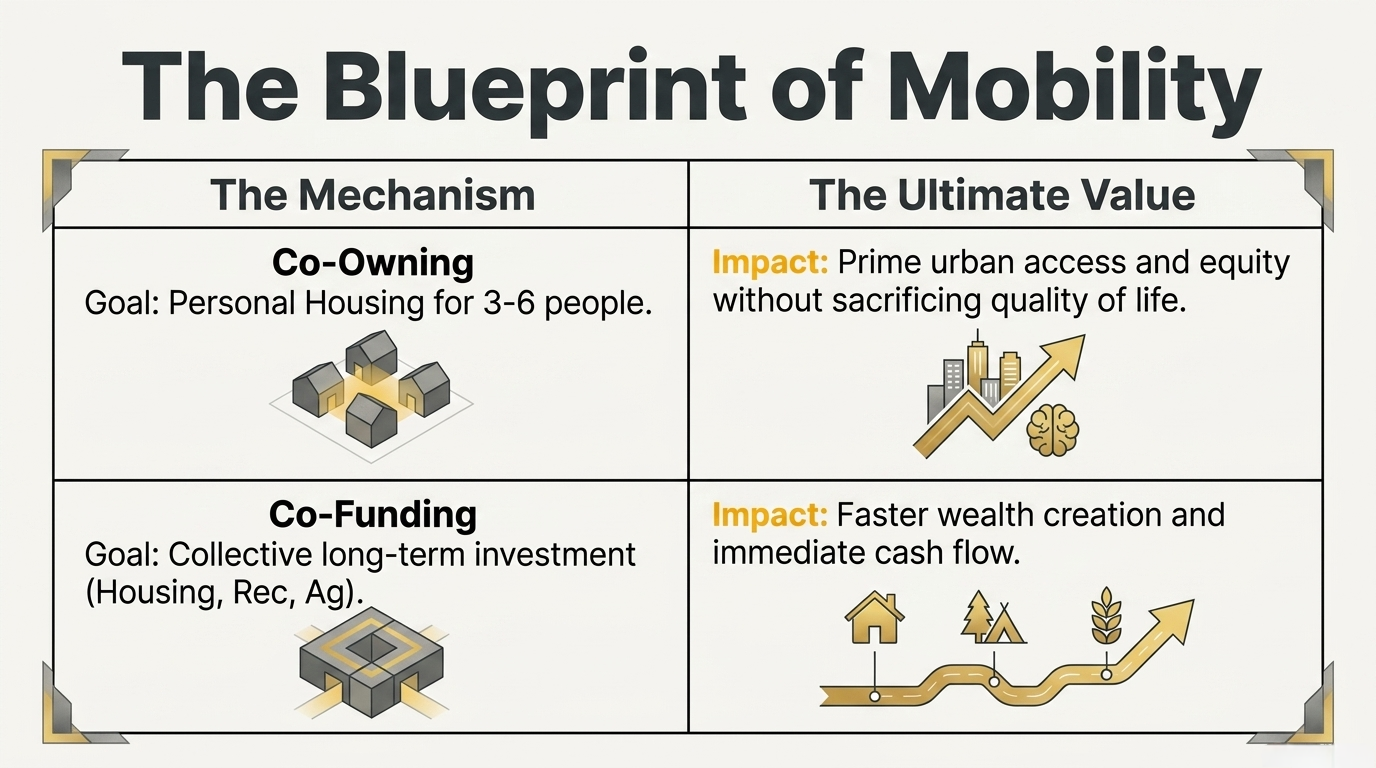
Instead of buying a full plot alone on the outskirts, 3 to 6 people co-own a piece of land in a decently developed area.
They split the cost of land acquisition, but each holds their own title, build at their own pace… Without sacrificing location or quality of life.
Instead of parking capital in a long-term land bank alone, a group of people collectively fund a development project (housing, recreational, agricultural et.c) with clear timelines, defined returns, and shorter paths to revenue.
… Long-term investment, yes. But without waiting for 30-years.
Same capital. Better use of it.
If you've been sitting on your disposable income, trying to figure out whether to "just buy land somewhere" or "wait until I have more money"...
You're asking the wrong question. What you should ask is:
Where can this capital work hardest for me right now, while still building something that lasts ⁉️
And the answer to that isn't buying a plot three hours from Lagos. Neither is it buying a piece of land you won't see returns on until 2060. It is…
“Where can I find a smart, structured entry into an already-productive area?”
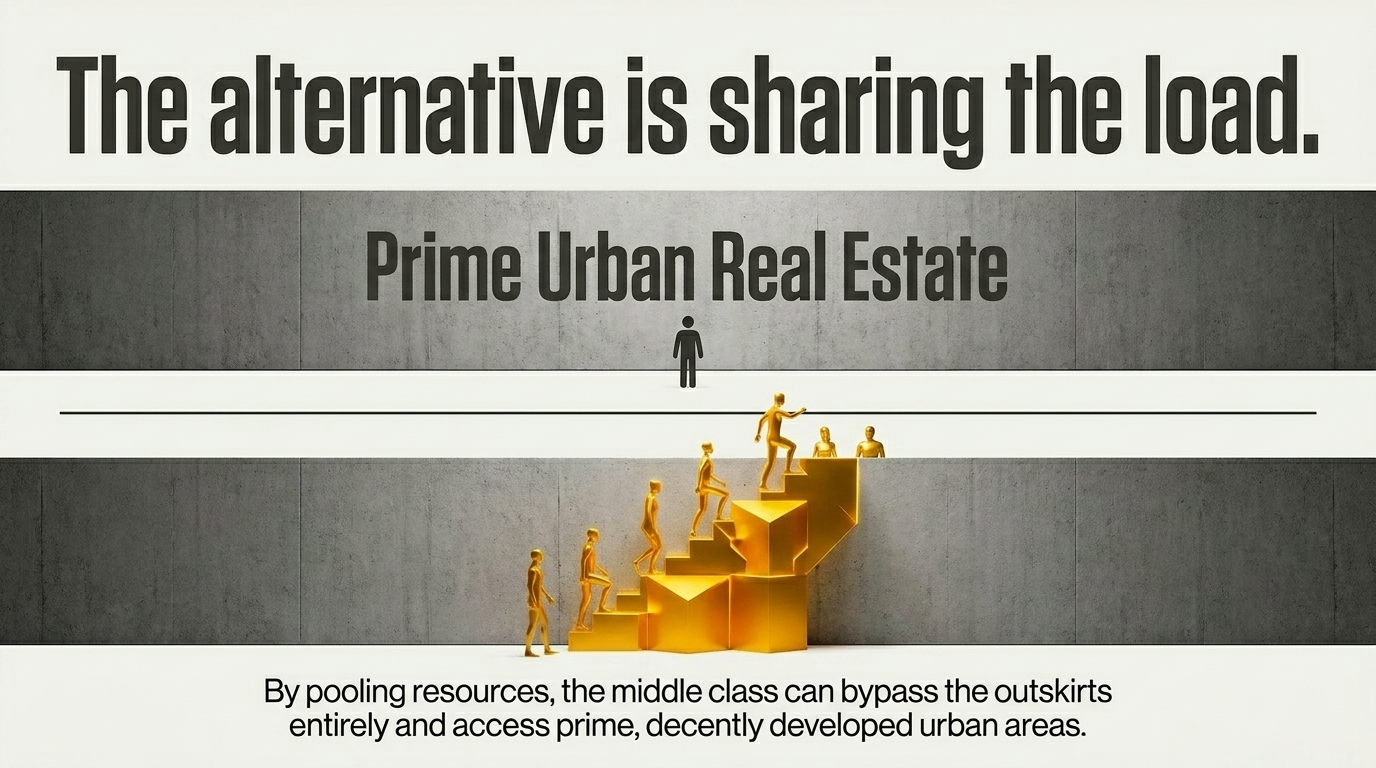
Shared cost. Defined ownership. Shorter path to value.
We spent months putting together the PetitHaus Value Capture Playbook. It's neither a sales brochure nor a listing catalogue. It's simply a framework that breaks down:
— Why the 100% ownership mindset is costing the middle class the most,
— How to tell a productive property from an expensive-looking one,
— What "affordable" actually means when the maths is done honestly,
— Investor archetypes, and which opportunities match each one,
— A 20-question checklist to run before signing anything,
— How to read your “Capital-Fit Assessment Score” and act on it.
1️⃣ First: 👉 Download it free here in 2 clicks
2️⃣ Second: 👉 Take the free Capital-Fit Assessment to discover which opportunities fit your capital.
This is the clearest thinking we can offer to help you. The first (playbook) lays out the landscape. And the second (assessment) tells you exactly where you belong in it… in less than 2 minutes.
If you're considering buying land, investing in property, joining a development project, or simply trying to understand where your capital fits best in the market…
Nobody can help you if you don't, first of all, understand the possibilities of opportunities around you. When you do, we'd be happy to walk you through what co-owning or co-funding looks like for your specific situation.
It's free. Short, no long articles. You can choose either, but they work best together for understanding strategic capital allocation and value capture in housing and real estate investment opportunities.
If this resonated, share it with someone who deserves a better map too.
01.

02.
Category
Discover insights into creating affordable homeownership with PetitHaus.




.avif)
.avif)