

CONTACT US

PETITHAUSRC7155563
PetitHaus: Innovative housing solution that helps low/medium income earners access affordable, highly efficient qualitative living with convenience and unparalleled cost effectiveness.
SNEAK PEEK
When most people hear affordable housing, they immediately think: Government-built housing. Subsidies. Rent control.
And honestly, that makes sense. For decades, that has been the default response: if housing is expensive, then the government must build cheaper houses. But let’s pause for a second.
If we built one million new housing units today, brand-new, well-designed, perfectly located. How many Nigerians could actually afford them?
There’s nothing wrong with subsidized housing. Subsidized housing matters. It has its place, and should continue. But it just can not be the only strategy. Beyond “dashing people free housing,” we need to empower people to access housing on their own terms.
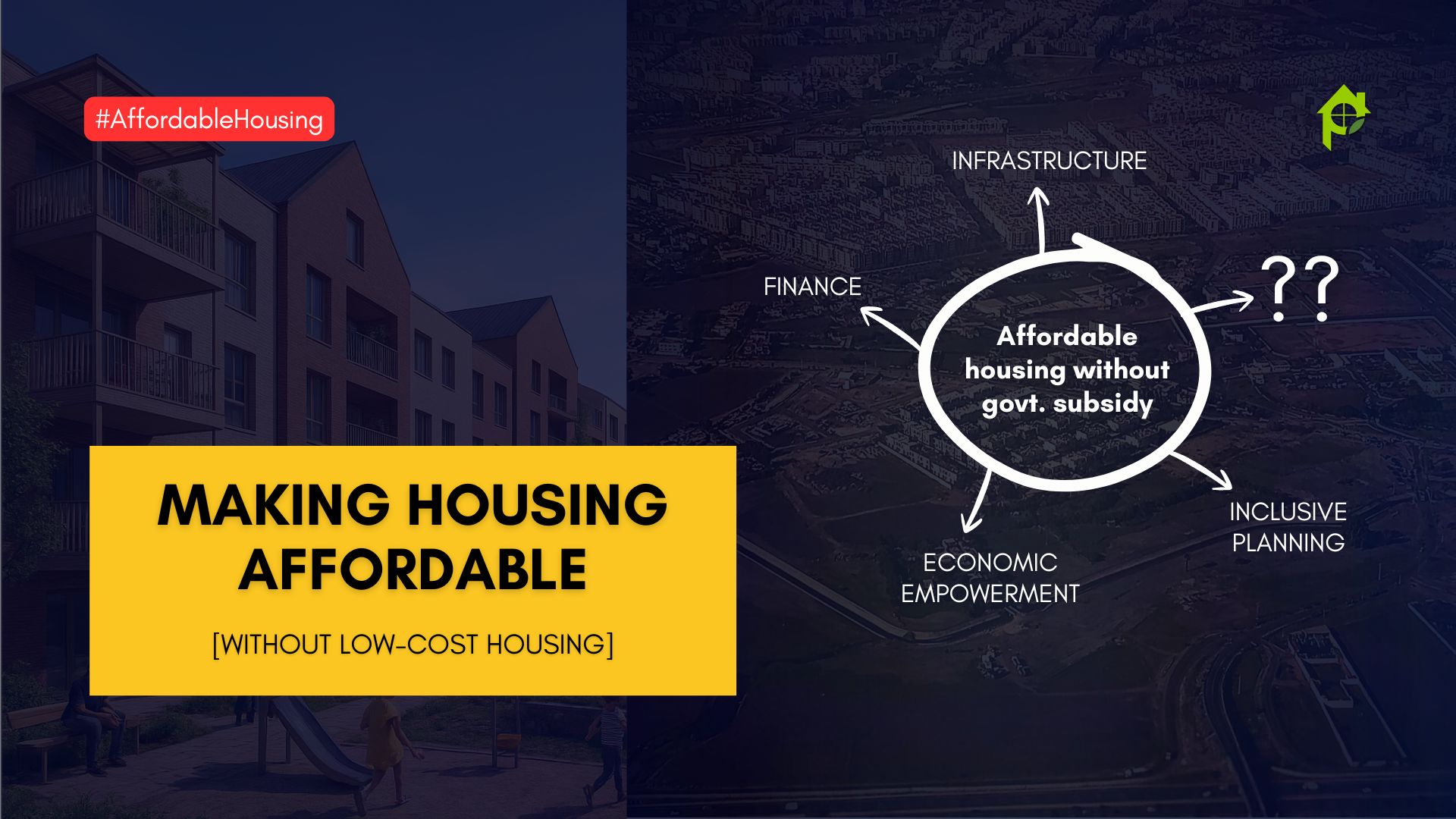
It’s also tempting to believe affordability can be engineered by reducing cost alone. But housing markets are ecosystems. They respond to infrastructure, income levels, access to finance, planning systems, and trust in governance.
Rent control sounds powerful, until you remember that government does not control a large enough share of the housing market to meaningfully dictate price.
And subsidies sound transformative, until you realize access will always be limited relative to demand.
So the bigger question becomes:
What happens if the government stops building subsidized housing tomorrow?
Does affordability collapse completely?
If the answer is yes, then we haven’t built a system. We’ve built dependence. And that’s where the mindset shift comes in.
Not “give me housing.” But “help me be able to afford housing.”
These are the parts we don’t talk about enough. Because affordable housing isn’t just about building cheaper houses. It’s about making people capable of affording housing in the first place.
And those are two very different conversations. So the real question here is: “How do we make housing affordable — even without low-cost housing?”
That shift in thinking changes everything.
Then we have to move beyond housing projects and start talking about conditions.
There are five foundational conditions that quietly determine whether housing becomes affordable, even without artificially lowering prices.
Not complicated strategies. Just “common-sense” fundamentals.
Affordable housing doesn’t start with buildings, it starts with infrastructure planning. With systems that make more land livable and economically viable.
Infrastructure and housing are not mutually exclusive. We underestimate how much infrastructure shapes housing.
Housing becomes expensive when infrastructure is scarce.
Without roads, transport networks, drainage, power, schools, and healthcare, housing remains artificially expensive. Or worse, when only a few parts of a city have reliable infrastructure, demand concentrates there. Land prices rise and rent follows.
But when infrastructure expands deliberately and sustainably, when mobility improves, when peripheral areas are connected, land supply effectively increases and the pressure diffuses.
In that sense, infrastructure becomes the most powerful housing intervention we rarely frame as housing policy.
This part is uncomfortable, but people need to earn a living and earn enough to afford a living.
Even with perfect infrastructure, people still need income. You can’t talk about housing affordability without talking about income. Even if rent drops, if wages stay low, housing will always feel expensive.
Nigeria is one of Africa’s largest economies. Yet many citizens struggle to afford basic rent. That’s because without earning power, affordability is an illusion.
Affordable housing solutions include:
Finance has to work because it drives everything. Right now, housing finance in Nigeria is expensive — both for the demand and supply sids of housing.
Developers borrow at high rates. Buyers have limited mortgage access. The cost of capital quietly drives up the final price of every home.
Yet we already have tools that can help:
When finance becomes more inclusive housing naturally becomes more accessible without artificially suppressing price.
You can build infrastructure, unlock finance, and grow incomes. Yet, if planning frameworks are rigid, opaque, or disconnected from income realities, housing becomes misaligned with the people it is meant to serve.
Infrastructure, income, and finance mean little without inclusive urban planning. We need planning systems that:
Otherwise, we design cities that look good on paper — but don’t work for real people. Cities are not just physical layouts. They are economic and social ecosystems.
If planning doesn’t recognize that, affordability remains theoretical.
And then we arrive at another uncomfortable truth. This is the part we often avoid. Social responsibility is not optional.
Government hesitates to invest when revenue recovery is uncertain, while citizens hesitate to comply when transparency is questionable. Housing systems collapse when this “mutual skepticism” exists.
It’s not just the government, affordable housing also depends on citizens. It depends on:
“It takes two to tango” sounds cliché, but it captures something fundamental:
Government must invest wisely. Citizens must participate responsibly.
These five pillars are not radical ideas. They’re common sense.
So why is implementation so difficult?
These five pillars are not abstract theories, they are basic governance principles. Where the problem lies is alignment, particularly motivation.
In 2011, researchers at University College London (UCL) introduced a framework called the COM-B model for transformation:
Nigeria has capability. We have the budgets, economic resources, and scale. Nigeria has opportunity. A (growing) young population and political flexibility.
But where we struggle is motivation alignment.
Citizens want affordable housing, the government wants revenue stability and growth. Both valid motivations, but when they are not aligned — when accountability feels weak on either side — transformation stalls.
And perhaps the deeper cultural barrier is complacency.
The subtle acceptance of “this is how we’ve always done it.” But systems only change when people collectively decide that the status quo is no longer acceptable.
The deeper issue isn’t just policy. It’s governance, accountability, and trust. If we truly want affordable housing in Nigeria (not just low-cost housing) we must:
Affordable housing isn’t a construction problem. It’s about building systems that allow people to thrive and afford housing on their own terms.
And until we focus on building better systems we’ll keep announcing housing projects… without actually solving affordability.
01.

02.
Category
Discover insights into creating affordable homeownership with PetitHaus.






.avif)
.avif)